The Proof Story

The StratusClean
Transformation

How a commercial cleaning franchise eliminated category confusion, unified its brand, and became Entrepreneur Magazine's Fastest Growing Franchise, four years running.

3.4 → 4.7 Google Rating
4 Years Entrepreneur Fastest Growing Franchise
~2× Revenue in Four Years

The Name Was the First Obstacle

Before a single conversation could happen, the market had already made a decision.

"Stratus Building Solutions" sounded like a construction company. Or a franchise development firm. Or a commercial buildout operation. At trade shows, at sales calls, in networking conversations, people repeatedly asked if the company physically built franchise locations. That question came up so often it had become expected.

The business was actually a commercial cleaning franchise. Large-scale janitorial services for commercial facilities. A clear category, straightforwardly delivered. But the name didn't say any of that. It said something else entirely, something that required correction before the actual pitch could begin.

This is the cost of category confusion at its most basic: the business was forced to explain itself before it could sell itself.

What Confusion Costs at Scale

In isolation, a single clarification doesn't feel like a crisis. You correct the misunderstanding, explain what you actually do, and move on. The problem is that this interaction is happening thousands of times, in every sales call, every marketing touchpoint, every digital search, every referral conversation. And each of those interactions carries a friction cost.

Customers who are confused hesitate. They require more context. They take longer to trust. Some of them decide, before the conversation really starts, that this probably isn't what they're looking for, and they move on. You never know how many of them there were, because they didn't stay long enough to tell you.

The franchise system was growing, but it was growing against resistance that didn't have to exist. The product was strong. The service was real. The market was large. But the name created a drag that compounded invisibly across every channel, every market, and every franchisee in the network.

Digital Confusion Is Worse

When human beings misunderstood the name, you could at least correct them in conversation. The digital ecosystem doesn't offer that option.

Search algorithms and AI systems categorize businesses based on available signals, name, category, keywords, reviews, and the consistency of those signals across the web. A name that doesn't match the service category creates ambiguity in those systems. The business gets categorized weakly, or categorized incorrectly, or not recommended in contexts where it should have been the obvious answer.

The business was operating with a visibility handicap it couldn't see. Not because the service was bad. Because the signals were confused.

“The business was forced to explain itself before it could sell itself. That friction compounds at scale in ways that are invisible until they’re not.”

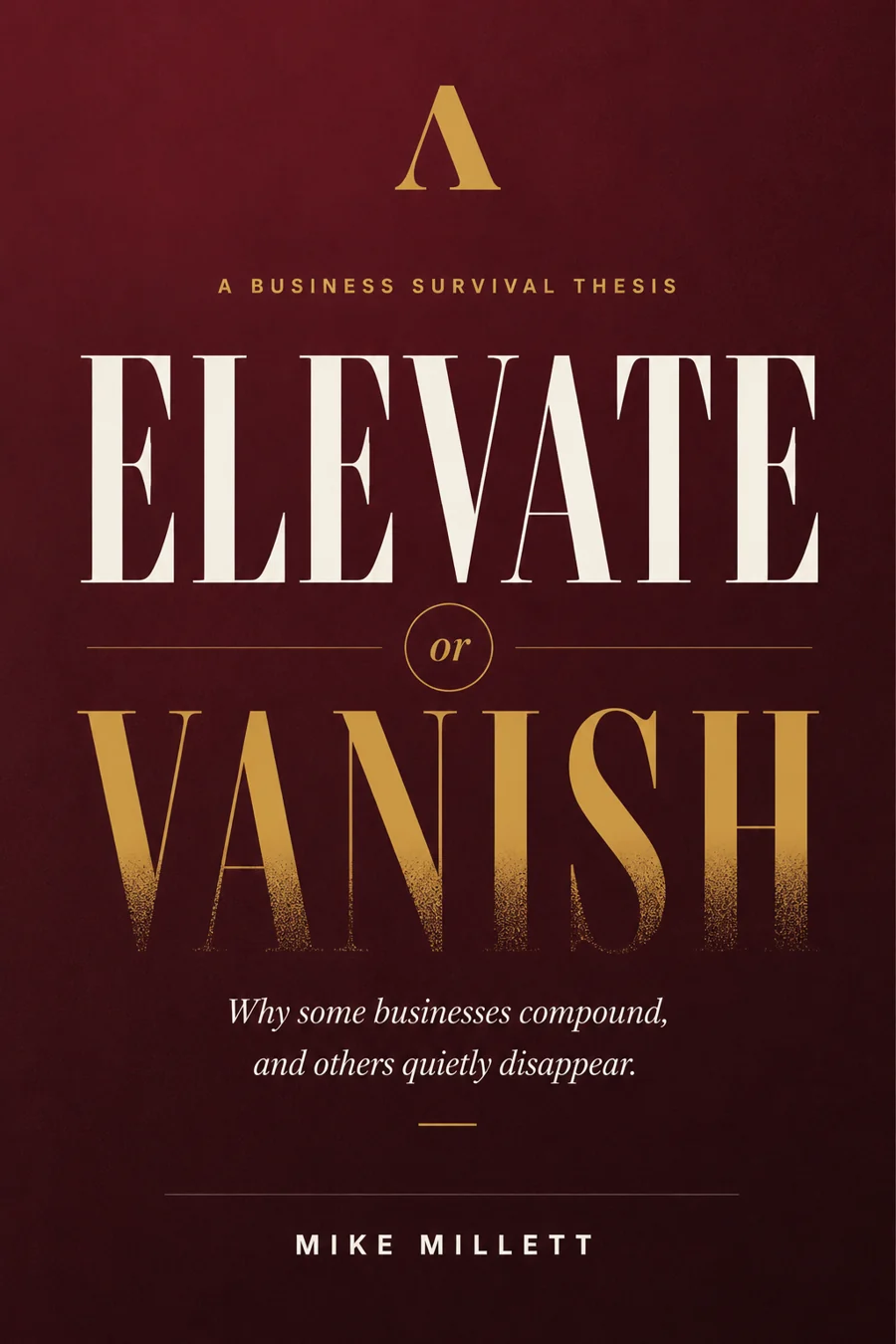
Mike Millett ,  Elevate or Vanish

The Decision Before the Decision

The most important moment in any transformation isn't the rebrand itself. It's the decision to rebrand before the problem has become undeniable.

Doug Flaig, CEO of StratusClean, and the leadership team didn't wait for the confusion to show up in collapsing revenue. They didn't wait for a competitor to establish the cleaner positioning they should have had. They recognized that the name was creating friction, measurable, compounding friction, and they chose to address it before that friction became a crisis.

That's the nature of proactive evolution. It's uncomfortable when the old system is still partially working. It requires conviction that what you're observing, the subtle drag, the slower trust formation, the explaining that shouldn't be necessary, is real and worth the disruption of change. Most organizations don't make that call. They rationalize the friction as normal. They wait.

The StratusClean leadership team didn't wait.

Clarity Was the Strategy

"StratusClean" did something the old name couldn't: it answered the category question before anyone had to ask it. Clean. Immediately understood. The janitorial and commercial cleaning service category, encoded directly into the brand name.

This sounds simple. It is not easy. Changing the name of a franchise system requires alignment across every franchisee, every market, every platform, every directory listing, every piece of signage, every vehicle wrap, every email signature. The operational investment is significant. The organizational alignment required is real. The temptation to leave certain markets on the old name "just for now" is constant.

The transformation happened with discipline. The entire franchise network moved to the new identity. Not most of it, all of it. The consistency of that execution is what made the change meaningful rather than cosmetic.

Unified Branding Across the Network

Beyond the name change, the transformation addressed the fragmentation that had developed across franchisees over time. Individual franchise operators had made their own decisions about how to present the brand locally. The result was a system that looked and felt different from market to market, which made it harder to build the cumulative trust that drives organic growth at scale.

The StratusClean identity gave every franchisee a cleaner, clearer framework to operate within. Same name. Same category clarity. Same visual standards. Franchisees weren't being constrained, they were being given a stronger foundation to build on.

Unified brands earn trust more efficiently. When a customer's experience in one market matches what they'd seen online, what they'd seen in another market, what they'd been told by a referral, the trust accumulates instead of starting over every time.

Investing in Organic Authority

The name change was the most visible part of the transformation. But it was accompanied by a systematic investment in the organic authority infrastructure that the brand would need as the digital landscape shifted.

The franchise had been heavily dependent on Google Ads for customer acquisition. That model was working, but advertising costs were rising, AI-driven search was changing how customers found businesses, and the economics of paid acquisition were trending in the wrong direction. The transformation included a deliberate pivot toward organic visibility: stronger review systems, more consistent brand signals across the web, clearer positioning that AI systems could categorize confidently, and the kind of content authority that compounds over time.

This wasn't a defensive move. It was a strategic bet on where the market was heading, made before the old model fully broke.

“The transformation happened with discipline. The entire franchise network moved to the new identity. Not most of it, all of it. That consistency is what made the change meaningful rather than cosmetic.”

Mike Millett ,  Elevate or Vanish

What Clarity Actually Does

The results of the StratusClean transformation were not immediate. Compound growth doesn't work that way. The early investments in clarity, consistency, and organic authority built quietly, accumulating in ways that didn't show dramatically in the monthly numbers but were laying the foundation for what came next.

Then the foundation became visible.

The Rating Shift

The franchise system's average Google rating improved from 3.4 to 4.7. That's not a small movement. A 3.4 rating signals inconsistency, customers are getting different experiences across the network, and some of those experiences are falling short of expectations. A 4.7 rating signals something very different: consistent delivery, expectations being set clearly and met.

The name did part of that work. When the category is instantly clear, customers arrive with accurate expectations. They know what they're getting. The service meets those expectations, not because the service changed, but because the clarity of the promise improved. Fewer disappointed customers. More satisfied reviews. The rating reflects the gap between expectation and delivery, and that gap narrowed when the positioning became clearer.

The operational alignment did the rest. Franchisees operating within a consistent brand framework deliver more consistent service. Consistent service earns consistent reviews. Consistent reviews build cumulative trust. This is compounding, made visible in a number.

Entrepreneur Magazine Recognition

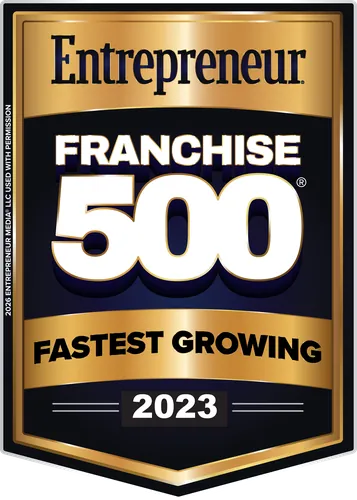
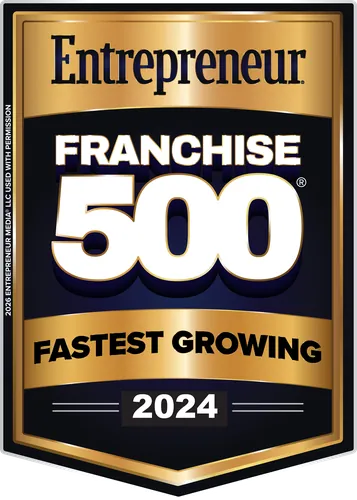
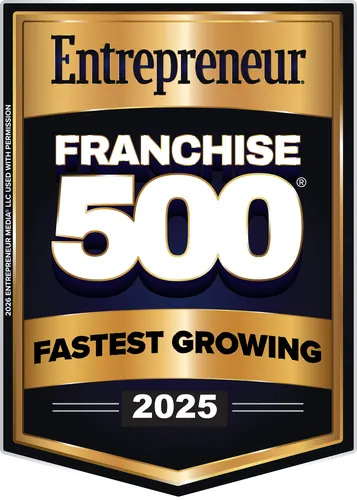
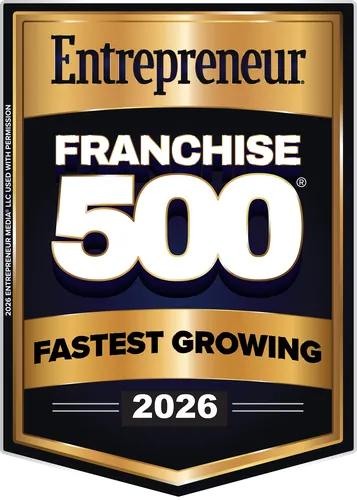
StratusClean was named Entrepreneur Magazine's Fastest Growing Franchise, four years in a row.

That recognition doesn't come from a single good year. It comes from sustained, compounding growth across a franchise network, the kind of growth that only happens when the underlying trust, positioning, and operational systems are working in alignment. The brand was easier to discover. Easier to understand. Easier to trust. Easier to sell. Easier to franchise. The clarity compounded into growth that external observers could measure.

Revenue Nearly Doubled

Within four years of the transformation, revenue nearly doubled. That's the financial output of everything that clarity, trust, and visibility build when they're allowed to compound.

The most important thing about that number is what it isn't. It isn't the result of a lucky market moment or a competitor stumbling or a single exceptional campaign. It's the result of a series of deliberate decisions, made early, executed consistently, sustained long enough for the compounding to become obvious.

What This Proves

The StratusClean transformation proves the central thesis of Elevate or Vanish more concretely than any argument could:

Clarity accelerates trust. Trust creates momentum. Businesses that make clarity investments early, before the confusion becomes a crisis, position themselves to compound while competitors are still rationalizing their friction.

The transformation succeeded because leadership chose evolution before decline made it obvious. Doug Flaig and the team made the difficult call, the name had to change, the brand had to unify, the organic authority had to be built, at a moment when the business was still performing well enough that the case for staying the same was easy to make.

They didn't make that case. They made the other one. And the market rewarded them for it.

3.4 → 4.7 Google Rating Improvement Across the franchise network after brand unification
4 Years Entrepreneur Fastest Growing Franchise Consecutive recognition, not a one-time anomaly
~2× Revenue in Four Years The compounding effect of clarity made visible

Entrepreneur Magazine, Franchise 500

Fastest Growing Franchise.
Four consecutive years.

Entrepreneur Franchise 500 Fastest Growing 2023 Entrepreneur Franchise 500 Fastest Growing 2024 Entrepreneur Franchise 500 Fastest Growing 2025 Entrepreneur Franchise 500 Fastest Growing 2026

This is not the result of a lucky year. Four consecutive Entrepreneur Magazine Fastest Growing Franchise recognitions is the compounding effect of clarity, trust, and operational alignment sustained over time.

This is what elevating
looks like. Everything else
is just waiting to vanish.

Read the full argument, six chapters on why it matters and how it works.

Start the Book About Mike Millett

Ready to build your own transformation story?

Digilu works with businesses that are ready to evolve before the market forces them to.

Work with Digilu →